What is the best way to clean and care for my eyeglasses?
Improper cleaning can damage your eyeglass lenses, resulting in scratches, haziness and peeling of coatings. Following these simple tips will help keep your eyeglass lenses in tip top shape!
DO.
- Use a lens cleaner developed especially for eyeglasses, along with a clean lens cloth or tissue (without the lotion!). Most good eyeglass cleaners will have an anti-static agent in them, which helps keep dust and particles from collecting on the lenses (especially in Arizona's dry climate), keeping them cleaner longer.
- If you are away from your lens cleaner, rinse your lenses with warm water and mild soap, (this rinses the dust and
particles off of the lens), and then wipe them dry with a lens cloth or tissue.
- Use two hands when putting your eyeglasses on and taking them off.
- Periodically replace, or brush out the dust and lint from inside the case.
- Avoid leaving your eyeglasses in excessive heat, such as the dash and sun visors of the car.
- Store glasses in an eyeglass case and take advantage of periodic, complimentary frame adjustments from Alvernon Optical Inc.!
DO NOT.
- Use household detergents, soaps, or window cleaners such as Windex. Often the ammonia based chemicals in these cleaners will break down certain lens coatings.
- Place eyewear face down on the lenses.
- Wipe with paper towels or clothing. Remember, the dust particles must be rinsed away to avoid scratching.
- Remove your eyeglasses when spraying hair spray to avoid build up on the lenses.
When I use my computer my neck becomes stiff, and my eyes feel tired and fatigued, plus I can't seem to get focused, is there any relief for these symptoms?
Computer Vision Syndrome is caused by the constant effort it takes for our eyes to focus on the computer screen. Symptoms include tired and sore eyes, headaches, blurred vision and fatigue. The good news is that relief can be found through the use of specially designed computer lenses. Computer lenses provide relief to professionals, computer users and hobbyists who require a large intermediate and near viewing range. Computer lenses provide optimum viewing, shoulder and neck comfort to long term computer users. These lenses also work well for Musicians, Accountants, Dentists, Librarians, Hair Dressers, Engineers and Hobbyists who benefit from a large intermediate viewing range.
What is the difference between an ophthalmologist, optometrist, and an optician?
An ophthalmologist is a medical doctor who specializes in vision care. He or she can perform vision examinations, prescribe medications, test for and treat eye diseases, treat eye injuries, and perform eye surgery.
An optometrist specializes in eye examinations and contact lens fittings. He or she can also test for eye diseases, fit contact lenses, and in many states, diagnose and treat certain eye conditions with medication.
Opticians fill prescriptions from optometrists and ophthalmologists and expertly fit eyewear. In Arizona a licensed optician may read the prescription from your existing eyeglasses and duplicate it into another pair. They may also sell contact lenses.
Why is it important to wear sunglasses?
Wearing Ultra Violet (UV) protecting sunglasses is like wearing sunscreen for your eyes! The "darkness" of the sunglass is not what protects your eyes from the damaging UV light. In fact, very dark sunglasses that do not have UV protection can cause more damage to your eyes than good. When a very dark sunglass is worn without UV protection the pupil dilates wider due to the darkness, which allows more light to enter the eye. If the sunglass does not block out the UV light, then more UV light enters the eye! Some research indicates that cataracts and other tissue damage may be caused by the continued exposure to unfiltered UV rays.
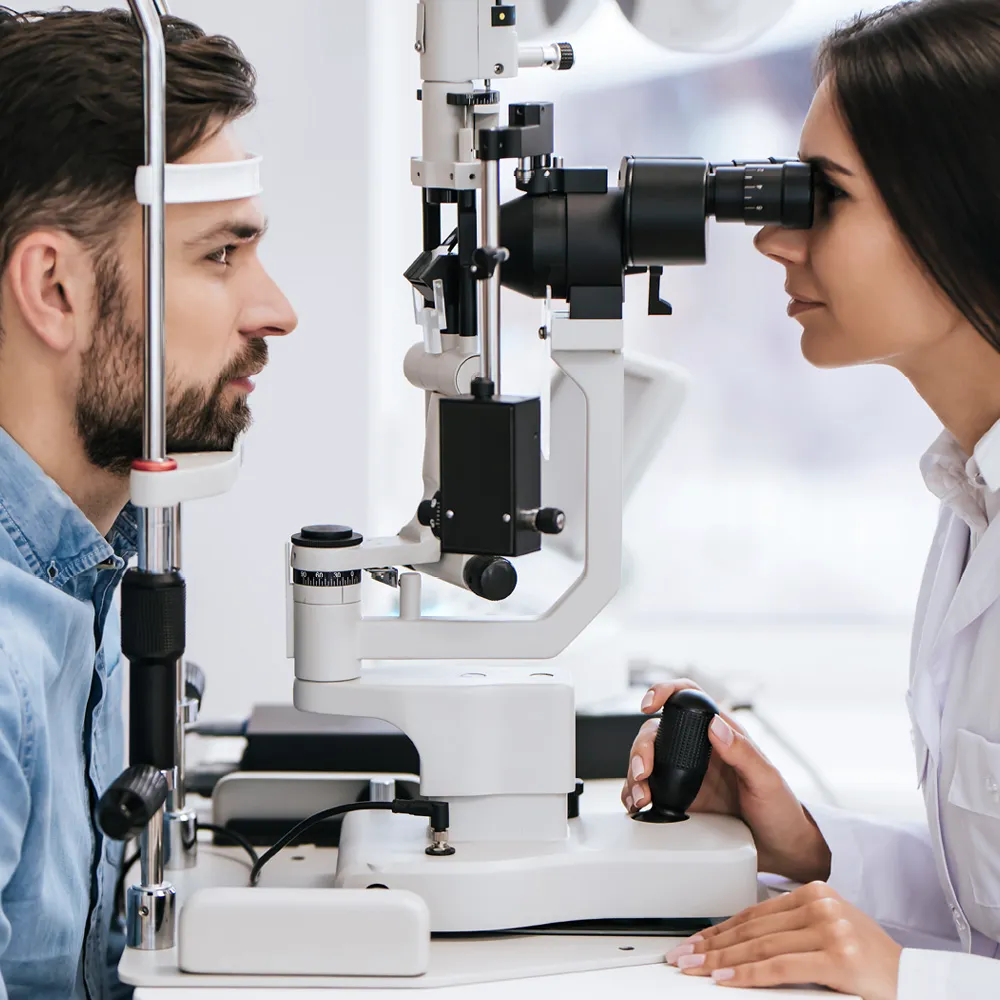
How often should I have my eyes examined?
Many eye diseases show no immediate symptoms and once symptoms occur, the damage may already be done. Routine eye exams are one of the most important preventative measures you can take for optimizing your vision and your overall health. A thorough eye examination can help detect cataracts, glaucoma and retinal disorders, as well as diabetes, high-blood pressure and brain tumors.
The American Optometric Association recommends the following eye examination intervals:
Recommended Eye Exam Intervals
| Patient Age (years) |
Asymptomatic/Risk Free |
At Risk |
| Birth to 24 months |
At 6 months of age |
At 6 months of age or as recommended
|
| 2 to 5 years |
At 3 years of age |
At 3 years of age or as recommended
|
| 6 to 18 years |
Before first grade and every 2 years thereafter |
Annually or as recommended |
| 18 to 40 years |
Every 2 to 3 years |
Every 1 to 2 years or as recommended |
| 41 to 60 years |
Every 2 years |
Every 1 to 2 years or as recommended |
| 61 and older |
Annually |
Annually or as recommended |
My eyeglass frame is broken, however my lenses are in good condition. Can I have my lenses cut down to fit a new frame?
Contrary to what many optical companies say, the answer is yes! Alvernon Optical Inc. takes a great deal of pride in being able to repair most any eyeglass frame that can be repaired. Whether the frame requires gold soldering, hinge replacement, or minor repairing, most repairs are done on-site and while you wait. If your frame is broken beyond repair, special measurements, care and attention are taken with your lenses so that they can be accurately cut down to fit another frame. Remember it is important after the repair, that the prescription should be verified and the eyeglasses realigned to ensure accuracy and comfort.
Am I entitled to a copy of my prescription when I have my eye examination?
Absolutely! According to the Federal Trade Commission (FTC), Title 16 - Commercial Practices, Part 456 - Ophthalmic Practices Rules
It is an unfair act or practice for an ophthalmologist or optometrist to:
- Fail to provide to the patient one copy of the patient's prescription immediately after the eye examination is completed. Provided: An ophthalmologist or optometrist may refuse to give the patient a copy of the patient's prescription until the patient has paid for the eye examination, but only if that ophthalmologist or optometrist would have required immediate payment from the patient had the examination revealed that no ophthalmic goods were required;
- Condition the availability of an eye examination to any person on a requirement that the patient agree to purchase any ophthalmic goods from the ophthalmologist or optometrist;
- Charge the patient any fee in addition to the ophthalmologist's or optometrist's examination fee as a condition to releasing the prescription to the patient. Provided: An ophthalmologist or optometrist may charge an additional fee for verifying ophthalmic goods dispensed by another seller when the additional fee is imposed at the time the verification is performed; or
- Place on the prescription, or require the patient to sign, or deliver to the patient a form or notice waiving or disclaiming the liability or responsibility of the ophthalmologist or optometrist for the accuracy of the eye examination or the accuracy of the ophthalmic goods and services dispensed by another seller.
|